Category: Blog

Thoughts, articles, comments on news, etc.

  • AI and Creativity: What I Let the Machines Do (and What I Never Will)

    AI and Creativity: What I Let the Machines Do (and What I Never Will)

    Every week someone asks me the same question. “Kuya, aren’t you scared AI is going to take your job?”

    Fair question. I’m an actor, a host, a director and a content creator. On paper, that’s exactly the kind of work people say AI will replace.

    My honest answer: I use AI almost every day. And the more I use it, the clearer it becomes which parts of my work are mine.

    I’ve been testing it in public

    I’m not talking from theory. I’ve been playing with these tools for a while, and posting the results here on the blog.

    I once asked ChatGPT to write VBA code that builds a whole PowerPoint presentation for me, then ran it as a macro. A deck in about five minutes. I wrote down the steps in How to use ChatGPT to create a PowerPoint presentation in 5 minutes.

    Then I gave the exact same prompt to five different AIs: “Invest โ‚ฑ10,000 for me.” ChatGPT, Grok, Gemini, Copilot and Meta AI. Same question, five very different personalities. That was a fun experiment. (Not financial advice, by the way. It was a test of the tools.)

    And recently I set up an AI assistant on Grok to help me with everyday errands. It even helped me find a cleaner for my condo. Small thing. But it saved me a lot of messages and time.

    What I hand to AI

    After all that testing, here is my simple rule:

    If it’s repetitive, I hand it to a tool.

    Things like:

    • First drafts of a list, a caption or an outline
    • Turning my messy notes into something organized
    • Researching options so I can compare them faster
    • Building slides, formatting, the boring structure work
    • Errands and admin that eat creative hours

    Every hour I don’t spend on admin is an hour I can spend rehearsing, filming, or being with people.

    What I never hand over

    Now here’s the other side.

    When I run storytelling trainings, I keep telling participants the same thing: put puso in it. Heart. Feeling. Your real experience. People don’t remember a perfect sentence. They remember a moment that made them feel something.

    AI can describe sadness. It can’t remember the day your lola died.

    When I act, I use my own memories. In a casting, if a director asks me to play a certain situation, I go back to a real moment from my life and play from there. That’s the job. That’s not something you can prompt.

    Same with hosting. When I hosted the Artitude Group’s exhibit at the Ayala Museum, a lot of the best moments were unscripted: reacting to the artists, the room, a joke that landed or didn’t. Live energy is human energy.

    So, these stay with me:

    • The emotion. The reason anyone watches.
    • The choices. What to keep, what to cut, what the story is really about.
    • The relationships. Directors, crews, clients, audiences. Nobody books a chatbot because they had a great coffee with it.
    • The final say. If my name is on it, I check it.

    The viral formula is still human

    Years ago I wrote about the 4 key elements to make a video go viral: relatability, making people curious, emotion, and something unbelievable. I still believe that.

    AI can help you brainstorm a hook. It can help you edit faster. But relatability and emotion come from knowing people. You learn that by living, by performing, by watching how a real audience reacts.

    I’ve posted 1,000 Instagram reels. If there’s one lesson in that number, it’s this: consistency beats luck. AI can make consistency easier. It can’t make you show up.

    My advice to fellow creatives

    Don’t fear it. Don’t worship it either.

    Use AI like a very fast assistant who never gets tired but has never lived a day in your shoes. Let it carry the boxes. You decide what goes on stage.

    The creatives who will struggle are the ones who either refuse to touch the tools, or let the tools do all the thinking. The ones who will thrive use AI to clear the boring stuff, then put all that saved time into the human part.

    That’s my plan, anyway.

    Are you using AI in your creative work? I’m curious how. Want to know more about what I do? Read my About page, or if you have a project in mind, let’s work together.

  • Life on Tour: What 28 Years on the Road Taught Me

    Life on Tour: What 28 Years on the Road Taught Me

    I’m Kuya Manzano, a Spanish-Filipino actor and singer, and I have been packing a suitcase for shows since 1998. Zarzuela stages across Spain, a six-month run in Shanghai, a national tour here in the Philippines, out-of-town show weeks with mountains behind the stage. People think touring is glamour. Half of it is. The other half is finding your toothbrush in a dark hotel room at 1 a.m. This is what life on tour has taught me about the craft, and about staying human while you do it.

    Kuya Manzano in costume as Padre San Vitores during the national tour of San Pedro Calungsod: The Musical

    Where the road has taken Kuya Manzano

    I was born in Madrid to a Spanish father and a Filipina mother. As a kid I watched my family’s rehearsals at Repertory, and my mom took me to see plays in London and New York. So the travelling bug and the theatre bug bit me at the same time. Rough deal for my suitcase.

    I studied voice and acting in Spain, competing against the whole world, without family around. Then came about 30 zarzuelas and operas in theatres across Spain and Portugal. La Verbena de la Paloma in Galicia. La Calesera and Gigantes y Cabezudos in Logroรฑo. Katiuska in Vitoria. Doรฑa Francisquita and Luisa Fernanda in Madrid. I toured Spain as the lead in Nos vamos de campamento, and as the lead in Save Peter Pan, which we toured around Spain in English. Work also took me to Holland.

    When the 2008 crisis dried up work in Spain, I went further. I spent six months in China at the Universal Expo in Shanghai, playing the lead in a very visual show promoting Spain. Yes, there was bullfighting. On a stage. In China. Life is funny.

    In 2011, passing through Manila, I dropped by a rehearsal. They were auditioning for someone who could sing opera. I got the part, and the Philippines has been home ever since. Later I played Padre San Vitores in San Pedro Calungsod the musical on a national tour, with a very young cast. One stop was a school campus in Cavite. Every stage counts, even the one in a school. The full list of shows is on my work history page.

    Lesson 1: The stage changes every week, so own your basics

    On tour, nothing stays the same. New stage, new wings, new floor, new lights, new acoustics. One out-of-town show week went straight from the airport into two rehearsals, and the stage was outdoors with mountains behind it. Beautiful. Also, it rained. I wrote about that week in the last days before opening night.

    What travels with you is your basics: your warm-up, your voice, your lines, your marks, your face. Even your makeup changes with the venue, because coloured lights and the distance to the audience change how it reads. I break that down in my theatrical makeup guide. If the basics live in your body, a new stage is an adventure. If they don’t, it is a panic attack with costumes.

    Lesson 2: Your voice is your luggage

    Planes are dry. Hotel air-con is drier. Rehearsing over dinner is normal on tour, and so is talking too much because everyone is excited. Protect the instrument. Warm up even when the schedule says there’s no time, and keep practising between cities. I still record at home with a USB mic I have had for 15 years. It’s in my post on my home recording setup for singers. Cheap gear, honest ears.

    Lesson 3: Language is part of the craft

    When I arrived in Manila, I barely spoke English or Tagalog, and people teased my accent. I did zarzuela in Spanish, Peter Pan in English in Spain, and now I work in a country where every sentence is a little Taglish adventure. Each language opens a different door to a character. My accent even helped get me cast as a Spanish priest. Turn the thing they tease you about into a tool. I wrote more about it in the Spanish words hiding in Filipino.

    Lesson 4: The cast is your family on the road

    In Spain I learned the hard way what it means to be far from family. On tour, the cast and crew become that family. You share vans, meals, rain and nerves. Be the one who is on time, knows the lines and makes the room lighter. Directors notice, and some of them will test you anyway. That’s a whole story in the toughest director I ever had.

    Lesson 5: Take care of the body and the head

    Touring is a sport. Long days, late meals, strange beds. The body you bring on the road is the body you perform with, so I keep training wherever I can. Here is my bodybuilding workout. The head needs training too: tired actors get dramatic offstage, not only onstage. My mind over matter tips are how I stay sane.

    Lesson 6: Enjoy the small things

    A towel folded into a flower in the hotel room. Mountains behind the stage. Rain that follows the cast around like a fan. Touring is hard work, but you get to see the world while you do what you love. Spanish by birth, Filipino by heart, and a little bit of every stage I’ve stood on. Not a bad deal.

    Life on tour FAQ

    Who is Kuya Manzano?

    I’m a Spanish-Filipino actor, singer, host, director and producer, performing since 1998. I started on stage in Spain and have lived and worked in the Philippines since 2011. More in my story.

    Where has Kuya Manzano performed?

    In theatres across Spain and Portugal, in Holland, for six months at the Universal Expo in Shanghai, and across the Philippines, including a national tour of San Pedro Calungsod the musical.

    What is the hardest part of touring as an actor?

    For me: a new stage every time, protecting the voice while travelling, and being far from family. Strong basics, good habits and a kind cast make it work.

  • Behind the Scenes: What It Really Takes to Get Cast in a Commercial

    Behind the Scenes: What It Really Takes to Get Cast in a Commercial

    People see the final ad. Thirty seconds, nice lighting, everybody smiling. What they don’t see is everything that had to happen before the camera rolled.

    I’ve done commercials for brands like Tide, Sun Life, Chevrolet and Strepsils. One of the Chevrolet ones went viral years after we shot it: I checked one day and it had passed 2 million views. That was a nice surprise.

    But today I want to take you behind the scenes. Not of the shoot. Of the casting.

    Success is a lot of small things

    A few years ago I wrote a quick list of everything that happened for me to get cast in a coffee commercial. Reading it again today, it still makes me laugh. And it still teaches me something.

    Here is the honest version.

    Before the call

    I had joined that talent agency eight years earlier. Eight years. Most people think a casting is about one great audition. A lot of it is relationships you built long before.

    I also help agencies on the other side of the table. I’ve worked as a casting associate, providing talents. So I know how stressful it is for the people choosing. They need someone reliable, fast.

    The production assistant on that job was a friend from another commercial we shot before, someone who believed in my talent. And I had a personal relationship with the agency owner. We regularly had coffee together, which is a little funny for a coffee commercial.

    None of that gets you the part. But it gets you the phone call.

    The last-minute call

    Then the call came. Audition, now.

    I ran. I got a speeding ticket on the way. I parked my motorcycle illegally to make it on time. After the audition I had to hide and wait for the police to leave before I could get my bike back.

    I’m not recommending that part. Please drive safely. But it shows you the reality: castings don’t wait for your schedule. Theatre doesn’t either. On one out-of-town musical we went from the airport straight into rehearsal. No hotel, no nap.

    In the room

    I dressed up specially to look good and formal for the part. If the role needs a certain look, walk in already looking like it. Help the director imagine you.

    I had confidence in my acting, and that confidence gave me calm. Calm is underrated. A nervous actor makes the whole room nervous.

    I smiled and made some jokes when I walked in. Not to be the clown. To create familiarity. A casting room is full of tired people who have seen fifty faces that day. Make them feel good for a minute and they remember you.

    When the director asked for a specific situation, I used my own memory. I recalled a real moment from my past that felt similar, and I played from there. That’s acting 101, but under pressure people forget it.

    And when I left, I said goodbye to each and every person in the venue. Every single one.

    After the audition: the small yeses

    This is the part most actors don’t think about.

    After the casting they asked for IDs and photos with sunglasses. I sent them in 30 minutes.

    They asked for photos with normal eyeglasses. I sent them.

    They wanted me shaved. I said yes.

    They asked for several photos taken that same day, to make sure it was really me and not an old picture. I did it.

    After I was cast, they asked for a lot of wardrobe options. I said yes.

    They changed the call time. I said yes.

    Every one of those requests is a small test. Can this person be trusted on a set full of moving parts? Each “yes” quietly answers that question.

    What I’d tell any actor

    If you’re starting out in commercials, or in any creative job really, here is what that list taught me:

    • Build relationships before you need them. The call usually comes from someone who already trusts you.
    • Be fast. When they ask for photos, sizes or documents, the actor who answers first often wins.
    • Show up looking the part. Make the director’s job easy.
    • Stay calm. Confidence in your craft is the best cure for audition nerves.
    • Be kind to everyone. The assistant today might be the producer tomorrow.
    • Say yes to the reasonable things. Flexibility is part of the job.

    Talent matters. Of course. But on most commercial sets, nobody remembers your audition. They remember that you were easy to work with.

    You can read the original list here: How I got cast for the coffee commercial. And the viral one: 2nd viral video: Chevrolet commercial.

    If you’re casting a commercial or a brand video and need an actor or host who says yes and shows up ready, see how we can work together. Need photos for your casting deck? They’re on my Photos page.

  • My “Cheap” Home Studio: How I Record Musical Theatre With a 15-Year-Old Mic

    My “Cheap” Home Studio: How I Record Musical Theatre With a 15-Year-Old Mic

    If you’re wondering what studio I use to record my songs, here it is.

    The honest answer? A 15-year-old USB mic and some software on my computer. That’s it. In the video description I called it what it is: a cheap recording system.

    Here’s my recording of “The Music of the Night” from The Phantom of the Opera, made exactly that way.

    My whole setup, in four lines

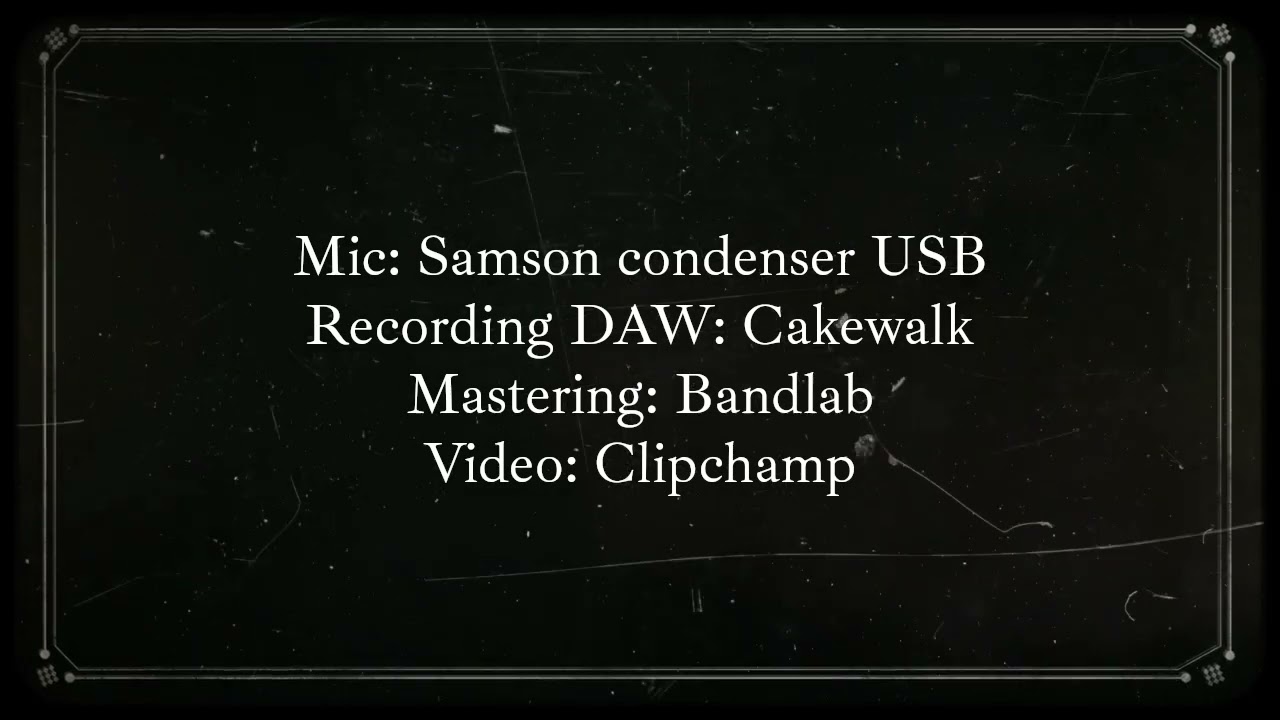
    This is the full list, the same one that shows up on screen in the video:

    • Mic: a Samson USB condenser microphone. Mine is 15 years old.
    • Recording (DAW): Cakewalk, on Windows.
    • Mastering: Bandlab.
    • Video: Clipchamp.

    No mixing desk. No vocal booth. No expensive engineer. I titled the video “Free studio” for a reason.

    Why an old mic is fine

    That Samson has been with me for 15 years. It still works, so I still use it.

    A USB condenser plugs straight into the computer. No extra box in between. For a singer who wants to practise, record and publish, that is the simplest path there is.

    Will a professional studio sound better? Of course. But a professional studio is not where you learn. You learn by recording yourself again and again, hearing what you really sound like, and fixing it.

    When I listed my own steps for a singing career years ago, one of them was simple: record yourself and post it. I admitted I had done it “somewhat” and could do a lot more. This setup is how I finally do it a lot more. You can read that list here: Tips for a singing career.

    The four steps, in plain words

    1. Record in Cakewalk. Cakewalk is my DAW, short for digital audio workstation. It’s where my voice gets recorded, take after take.

    2. Master in Bandlab. Mastering is the final polish that makes a song sound finished and balanced. I let Bandlab handle that part.

    3. Make the video in Clipchamp. For “The Music of the Night” I kept it very simple: an old-film style black card with the song title, my name and the gear list. The song is the star.

    4. Upload and share. Then it goes to YouTube, and to my Music page here on the site.

    That’s the whole system. Nothing secret.

    Simple visuals are a choice

    Some people think every song needs a big music video. I don’t think so.

    With “The Music of the Night,” I wanted you to just listen. The Phantom’s song is about letting the music take over in the darkness. A dark, quiet screen fits that.

    Other times I play more. For “Everything’s Coming Up Roses” from Gypsy, I made a full AI video in CapCut, using Seedance 1.0, because the higher models were too expensive. I needed a video to go with a recording I made on a new computer with new software from Bandlab. Not everything came out how I planned, and I posted it anyway, as part of learning and creating with AI.

    That’s the point. Practice makes progress.

    Why I love “The Music of the Night”

    I’ve shared The Phantom of the Opera here before, including a rare version with five Christines and one Phantom: 5 Christines and 1 Phantom of the Opera.

    “The Music of the Night” is a gift for a singer. It’s soft, then powerful, then soft again. It asks for control more than volume. Recording it at home is a good test, because the mic hears everything. Every breath, every wobble.

    Breathing is the big one. If you want help there, start with Ways to Sing Better and Discover Your True Voice, especially the part about breathing from the belly instead of the chest.

    Why a home setup matters

    Stage work can keep me busy for weeks at a time. When we take a musical out of town, it’s off the plane and into rehearsal, with costume fittings on top. But a singer still needs to sing for himself, between shows and between projects.

    A home setup like this means I can keep recording, keep learning and keep sharing, without waiting for studio time or a big budget. All you need is a mic, a laptop and the will to press record.

    If you want to start

    My advice is simple:

    • Use what you have. An old mic that works is better than a new mic you’re still saving for.
    • Record often. You get better by listening back, not by buying gear.
    • Keep the video simple. A clean card and a good song are enough.
    • Post it. Done and shared beats perfect and hidden.

    When you post, give it a good title with words people actually search for, and edit out the fluff. I shared more of what worked for my channel in How to make your first 1000 subscribers in YouTube.

    Listen to the video above and tell me what you think. And if you record at home too, tell me your setup in the comments. I’d love to hear it.

  • Off the Plane, Into Rehearsal: The Last Days Before Opening Night

    Off the Plane, Into Rehearsal: The Last Days Before Opening Night

    People see the bow at the end. They don’t see the week before it.

    A while back, I filmed mine. Ten days of the last rehearsals before opening a musical out of town, from a rainy desk in Manila to a giant stage with mountains behind it. Here’s the vlog, and here’s what those days really look like.

    Rainy days are script days

    It started with rain. A lot of rain.

    I had orders to deliver and a charity giveaway to drop off, and the weather did not care. I came home soaking wet. Even inside the boots. You don’t see it on camera, but trust me, I was there.

    So I did what an actor does on a rainy day. I sat down with the script.

    People think the learning happens in the rehearsal room. A lot of it happens at your kitchen table, alone, with the script in your hand. The room is where you test it. Home is where you build it.

    The last rehearsal at home base

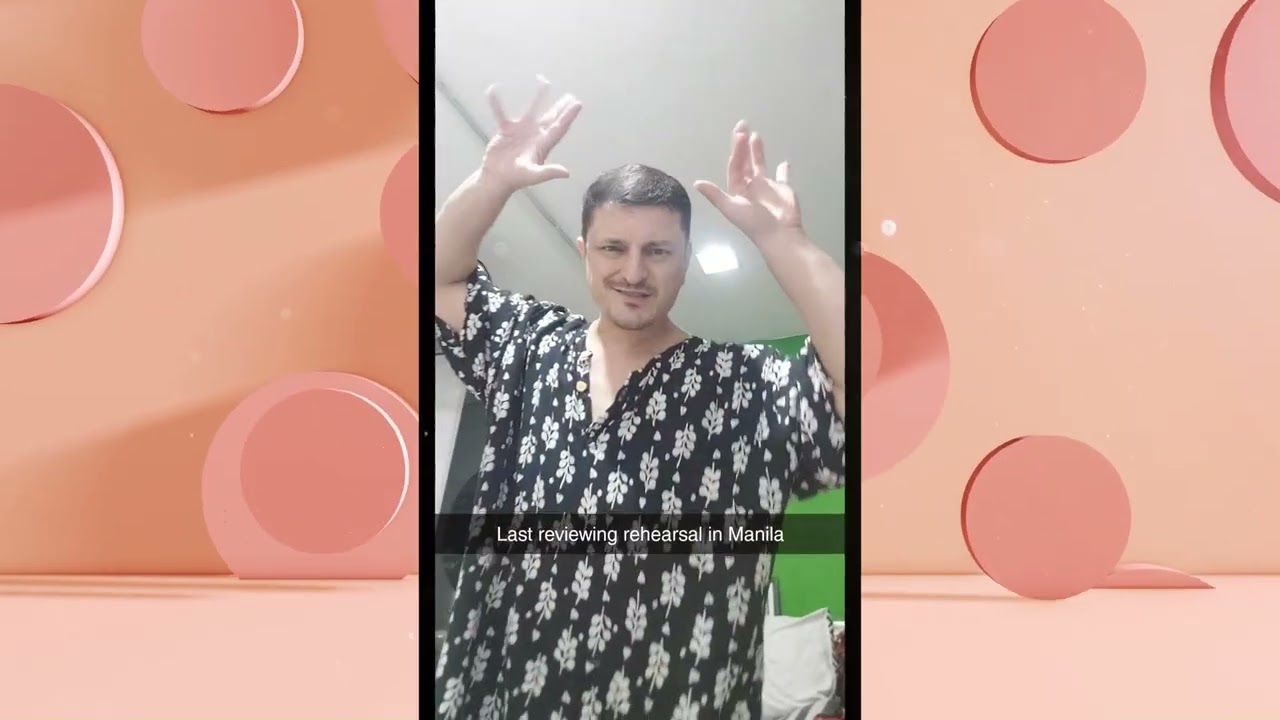
    Before we flew out, we had our last review rehearsal in Manila. That one feels different.

    It’s the last time you run the show in a space you know, close to home. From here, everything moves. New stage, new room, new rhythm.

    I like that feeling. A little nervous, a little excited, mostly ready to go.

    Off the plane, straight into rehearsal

    Here is the part nobody puts on a poster.

    Without much sleep, we went from the airport directly to rehearsals. No hotel first. No nap.

    We rehearsed. We ate. Then we got ready for rehearsal number two, with costume fittings on top. Some of us were even rehearsing while having dinner. Haha. That’s theatre.

    Only at night did we check in at the hotel. And look, someone had folded the towels on my bed into a flower. So much effort. After a day like that, small things like that hit you right in the heart. Thank you.

    If you’re starting out, this is the honest picture. Taking a show out of town is not a vacation with a show at the end. It’s a work trip where the work starts the moment you land.

    Checking the mirror

    Later, by the sea, I checked my reflection and asked the question every performer asks before opening: am I ready for the show or not?

    From certain angles, yes. Haha.

    I’m joking, but I’m also not. That mirror check is real. Your body is your instrument, and away from home you have to look after it with less sleep, new food and a new schedule. I wrote about how I train in my bodybuilding workout, and the habit helps most on weeks like this.

    The rain followed us

    Funny thing. We left Manila because it was raining so much, and we came to the province where it was sunny.

    Guess what. Then one day it rained in the province, and it was sunny in Manila. What the hell?

    You cannot control the weather. You cannot control the flight, the traffic or how much sleep you get. What you can control is how you show up. I keep coming back to that idea, and I wrote more about it in Mind Over Matter.

    A giant stage with mountains for a backdrop

    Then we saw where we were going to perform. Wow.

    A giant stage, and behind it, the mountains. Beautiful. We would have an LED screen there for the show, but for a moment, with nothing set up yet, nature was our set designer.

    Outdoor stages change everything. The space is bigger, the sound travels differently, the light keeps moving. You have to fill a lot more air with your voice and your body. Rehearsing in a room and then walking onto a stage like that is a big jump, and that’s exactly why the days on site matter so much.

    And at the end, we all take a bow. Including the cow. Watch the vlog and you’ll see.

    Gratitude, every day

    On one of the quieter mornings I put a line on the screen in the vlog: every day, so many opportunities to be grateful and giving.

    That’s how I tried to live that whole trip. Grateful for the work. Grateful for the cast and crew who were rehearsing over dinner with me. Grateful for whoever made that towel flower. And grateful for a big plate of bulalo after a long day. If you have God, is this legal?

    What I take from show week

    When I look back at these ten days, three things stand out.

    1. Prepare when nobody is watching. The rainy script days at home made the rehearsal days on site possible. Tita Baby taught me this a long time ago, and I wrote about it in The Toughest Director I Ever Had.

    2. Expect the plan to change. Airport straight to rehearsal, rain in the “sunny” place, an LED screen that’s not there yet. Stay flexible, and save your energy for the stage.

    3. Keep it light. My vlog is full of bad jokes. If a tomato is a fruit, is ketchup a jam? Laughing keeps a cast together when everyone is tired.

    Musicals have given me some of my happiest days on stage, like the honor of joining the press performance of Les Miz in Manila. The road version comes with more airports and less sleep, and I still love it.

    If you want to see what the week before opening looks like for a theatre actor out of town, watch the full vlog above. And tell me in the comments: what do you think happens backstage that nobody talks about?

  • The Toughest Director I Ever Had (and Why I’m Grateful)

    The Toughest Director I Ever Had (and Why I’m Grateful)

    I’ve been performing since 1998. Spain, China, Holland, Portugal, and the Philippines since 2011. People sometimes ask me what the biggest lesson of all those years is.

    Shouting in rehearsal

    My answer always takes me back to one rehearsal room, and one director: Baby Barredo, founder of Repertory Philippines. My Tita Baby.

    When I moved to the Philippines, I joined her theater company and did my first musical here, Seussical. I was learning everything again: the local dynamics, the way productions work, how hard it really is to make a living from theater here.

    Then came the only play she ever directed me in: Guadalupe the musical.

    Let me be honest. It was tough. Very tough.

    She shouted at me during rehearsals. She insulted me in front of the cast. Then after rehearsal I would help her into the car and we would go for dinner as a family, like nothing happened.

    She was harder on blood relatives on purpose. She didn’t want anyone to think she was favoring us. And she wanted to make us better actors.

    I wanted to quit. I’m not ashamed to say it.

    99% perspiration

    Tita Baby used to say theater is 99% perspiration and only 1% inspiration. I heard it so many times I could recite it in my sleep. During Guadalupe I finally understood it.

    So I stopped focusing on how I felt in the room. I focused on the work.

    Every single day I worked on my character. Not only during rehearsal. At home, in the car, before sleeping. Small things. A look, a pause, the way a line lands.

    Here’s the part nobody tells you. When the director is not around, a lot of people suddenly have opinions about your role. Other actors, production, dancers. Maybe ten different people told me ten different things to do with my character while she was away.

    I closed my ears.

    Not out of arrogance. I had a path that the director and I had started building together, and I kept walking it. Changing direction every time someone gives a suggestion is how you end up with a character that belongs to nobody.

    It paid off

    Guadalupe became the best performance of my life. Among other plays, I was nominated as Performer of the Decade in the Philippines by BroadwayWorld, next to big names I grew up admiring.

    I’m not telling you this to show off. I’m telling you because I almost quit before it happened.

    What I learned

    When I look back, the lesson is not “find a nice director.” Nice is great. But nice is not what made me better.

    Here is what I took from that rehearsal room, and what I still use on every set today:

    1. Separate the person from the work. Tita Baby could be hard in rehearsal and loving at dinner. Both were real. Once I understood that, the shouting stopped feeling personal. It was about the scene.

    2. Do the work daily, even when nobody is watching. Talent gets you into the room. Daily work is what keeps you there. Most of the progress on that character happened when nobody was looking. I still work this way. On rainy days I sit at home with the script, like I did in the last days before opening night of a show out of town.

    3. Choose your voices. Listen to your director. Respect your fellow actors. But don’t rebuild your character every time someone has a new idea. Commit to a direction and go deep.

    4. Discomfort is often the price of growth. I wanted to quit because it hurt. Looking back, the pain was the exact thing pushing me past where I was comfortable.

    5. Gratitude can come later. In the moment, I was not grateful. Today I am. I’m an actor in the Philippines because of her. I used to watch her plays and rehearsals as a kid, and that is where it started.

    Why I’m sharing this now

    Since then I’ve done dozens of films, series and stage plays. GomBurZa, Heneral Luna, He’s Into Her, Can’t Buy Me Love, Bad Genius, Miong, Marco Polo at the CCP. Every one of those projects had hard days.

    What got me through was what I learned in Guadalupe: show up, do the work, trust the path, and don’t take the hard days personally.

    If you’re an actor, a singer, or honestly anyone working on something difficult right now, and someone is pushing you harder than feels fair, ask yourself one question.

    Are they trying to break you, or are they trying to make you better?

    Sometimes the answer is the first one, and then you walk away. But sometimes it’s the second, and that might be the most valuable season of your career.

    I wrote more about Tita Baby here: 1st death anniversary of director Baby Barredo. You can see my full list of roles on my Work History page, and if you want to know more about me, start with About.

    Thank you, Tita Baby.

  • Atasha Muhlach: Beauty, Talent, Hard Work and the Making of a Star

    Atasha Muhlach: Beauty, Talent, Hard Work and the Making of a Star

    There are people you admire from a distance.

    And then there are people you get the chance to work with, watch up close, and realise: yes, this person has it.

    Atasha Muhlach is one of those people.

    I had the pleasure of working with Atasha on the Philippine adaptation of Bad Genius: The Series, where she took on the central role of Lin. The series was directed by Derick Cabrido and also starred Jairus Aquino, Gab Lagman and Hyacinth Callado. [pep.ph], [en.wikipedia.org]

    Watching Atasha work gave me a different perspective from simply seeing her on television or social media.

    She is beautiful, obviously. She has glamour. She has that sexy, confident star presence that immediately catches your attention.

    But here’s the important part:

    Atasha Muhlach is much more than a beautiful face with a famous surname.

    She works.

    And I think that is what will ultimately define her career.

    Kuya Manzano and Atasha Muhlach on the set of Bad Genius: The Series

    The Actress

    Taking the lead in Bad Genius was no small assignment.

    Atasha played Lin, the brilliant student at the centre of the Philippine adaptation. [pep.ph]

    For me, what is interesting about Atasha as an actress is that she has both presence and vulnerability.

    Some performers can act, but the camera doesn’t necessarily fall in love with them.

    Others have enormous screen presence, but you don’t quite believe the character.

    Atasha has the raw ingredients for both.

    And Bad Genius gave audiences an opportunity to see her step into a much more demanding dramatic space.

    Here’s a little piece of our work together on Bad Genius: The Series.

    The Singer and Performer

    Then there is another side of Atasha: music.

    She isn’t limiting herself to acting. She has been building a recording career as well, releasing songs including Love Story Kong Bitin and Handa Na Ako. [pikapika.ph], [vivavicor.com]

    And now she’s taking that combination of acting, singing and dancing to the theatre.

    In 2026, Atasha took on the title role of Annie in Bongga Ka, ‘Day!: The Annie Batungbakal Musical. She described preparing for the audition through months of dancing, singing, acting workshops and research. [gmanetwork.com]

    That’s significant.

    Because versatility is easy to claim.

    It’s much harder to actually put yourself in situations where you have to prove it.

    Yes, She’s Gorgeous

    Let’s not pretend this isn’t part of being a star.

    Atasha is gorgeous.

    She can be elegant, sophisticated, playful and, yes, sexy.

    But what I like is that the glamour doesn’t have to overwhelm everything else.

    Being sexy isn’t just about showing skin. It’s confidence. It’s how you carry yourself. It’s being comfortable in your own presence.

    Atasha has that.

    And combined with her height, her camera presence, her fashion sense and that unmistakable Muhlach charisma, she has the ingredients of a genuine leading lady.

    But beauty may get somebody’s attention.

    It doesn’t sustain a career.

    The work does.

    Scene from Bad Genius: The Series on Viva One with Kuya Manzano and Atasha Muhlach

    The Famous Name and the Work Behind It

    Of course, let’s address the elephant in the room.

    Her surname is Muhlach.

    Atasha is the daughter of Aga Muhlach and Charlene Gonzales, so she was born into one of Philippine entertainment’s most recognisable families. [en.wikipedia.org]

    That creates opportunities.

    But it also creates expectations.

    People watch more closely. They compare. They expect you to prove that you deserve the opportunities that come your way.

    What I respect is that Atasha herself talks openly about work.

    Speaking about preparing for Bongga Ka, ‘Day!, she said her preparation involved months of singing, dancing and research. She also explained the philosophy she learned growing up: if you want something, you work for it. [gmanetwork.com]

    That tells me much more about somebody than a surname ever could.

    And having seen her working myself, I understand what she means.

    I learned the same lesson the hard way. You can read it in the story of the toughest director I ever had.

    Fame Is One Thing. Star Quality Is Another.

    Atasha was already recognisable before she had to prove herself as a dramatic lead.

    But fame and star quality aren’t exactly the same thing.

    Fame means people know who you are.

    Star quality means they want to keep watching.

    That’s where I think Atasha becomes particularly interesting.

    She can act.

    She can sing.

    She can perform live.

    She has beauty.

    She has sex appeal.

    She has a famous name.

    She has youth on her side.

    But most importantly, she seems prepared to work for it.

    And that last quality may be the one that matters most.

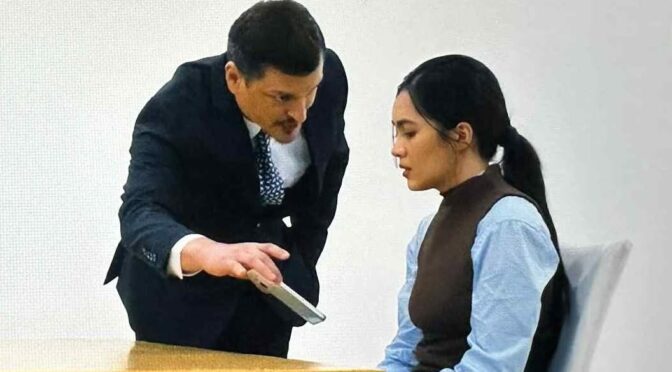
    Kuya Manzano shows a phone to Atasha Muhlach in a scene from Bad Genius: The Series

    A Personal Shout-Out

    This isn’t meant to be a review.

    It’s a shout-out.

    I had the opportunity to perform alongside Atasha, and I’m genuinely happy to see her career continuing to grow.

    There is something special about seeing somebody you have shared a set with continue to take bigger swings, challenge themselves and discover what kind of artist they can become.

    And Atasha’s story is still very young.

    Where exactly will she go?

    Film? Television? Music? Theatre?

    Hopefully all of them.

    Because the Philippine entertainment industry needs performers willing to cross those boundaries.

    So, Atasha, from one fellow performer to another:

    Keep going. Keep learning. Keep taking risks. Keep working.

    You have the name.

    You have the beauty.

    You have the talent.

    You have the spotlight.

    But from what I’ve seen, you also have something much more important:

    the willingness to earn your place in it.

    And that’s what makes a star.

    Congratulations, Atasha. I’m rooting for you.

    โ€“ Kuya Manzano

  • Showbiz I recommend or condemn

    To watch films or series:

    Game of Thrones, Tulsa King, Yellowstone, Dutton Ranch, Rocky, Citizen Vigilante, original Star Wars saga, Succession, Big Boy Bubby, Wicked, musical theater in general, Grease, The Book of Mormon, Southpark, Landman, 1883, 1923, The Pitch, The good doctor, Attorney Woo

    Avoid films or series:

    Gotham, Odysee, Superman Returns, Andor, Supergirl, The Fall Guy, Beekeeper,

    Actors I like:

    Sacha Baron Cohen, Johnny Depp, Silvester Stallone, Kiefer Sutherland, The Rock, Julia Garner, Kuya Manzano, Andrew Dice Clay, Sean Penn, Kevin Spacey, Bruce Lee, Donnie Yeng, Jet Li, JC Van Damme, George Carlin

    Directors/Producers I like:

    Spielberg, Stallone, David Lynch, Taylor Sheridan

    Genres I like:

    Comedy, action, musical, political, FBI, lawyers, mental health

    Genres I don’t like:

    Suspense, thriller, horror

    Speaking of musical theater, here is what the toughest director I ever had taught me during Guadalupe the musical.

  • Mind Over Matter: Tips for Mental Wellness

    Mind Over Matter: Tips for Mental Wellness

    Learn effective strategies for prioritizing mental health. Discover actionable tips to enhance your emotional well-being and why they matter for everyone.

    —

    In today’s fast-paced world, mental health is a critical topic that often goes overlooked. With rising stress levels and anxiety, it’s essential to prioritize mental wellness. In this post, you’ll learn about practical steps to enhance your mental health, why these strategies are vital, and how you can implement them into your daily life.

    ## About Kuya
    Kuya is a passionate advocate for mental health awareness, sharing his journey and insights on ADHD and emotional well-being. With personal experiences and professional insights, he guides others toward better mental health practices.

    ## Step 1: Prioritize Self-Care
    – **Why This Matters:** Self-care is foundational for mental wellness. It helps manage stress, anxiety, and improves mood.
    – **How to Do It:** Engage in activities that bring you joy, ensure proper nutrition, and get enough sleep.
    – **Example:** Kuya emphasizes the importance of changing oneโ€™s environment, such as stepping outside for sunlight, to uplift mood.
    – **Common Mistake:** Neglecting personal needs can lead to burnout; remember to focus on yourself first.

    ## Step 2: Practice Mindfulness
    – **Why This Matters:** Mindfulness helps ground you in the present and reduces anxiety.
    – **How to Do It:** Incorporate mindfulness practices like meditation, deep breathing, or simply taking a moment to appreciate your surroundings.
    – **Example:** Kuya shares his nightly meditation routine, where he practices deep breathing to unwind.
    – **Common Mistake:** Many people rush through mindfulness practices, forgetting to actually engage with the process.

    ## Step 3: Connect with Others
    – **Why This Matters:** Human connection is essential for mental health; it combats feelings of loneliness and isolation.
    – **How to Do It:** Make an effort to reach out to friends or family, even if itโ€™s just a brief conversation.
    – **Example:** Kuya talks about how small interactions, like greeting a receptionist, can create a sense of community.
    – **Common Mistake:** Avoiding social interaction due to fear or anxiety can worsen mental health issues.

    ## Step 4: Seek Professional Help
    – **Why This Matters:** Sometimes professional guidance is necessary to navigate mental health challenges.
    – **How to Do It:** Donโ€™t hesitate to reach out to a mental health professional if youโ€™re struggling.
    – **Example:** Kuya openly discusses his experiences with ADHD and the importance of seeking help.
    – **Common Mistake:** Many people overlook the value of therapy, thinking they can manage alone.

    ## Conclusion
    Prioritizing mental wellness is not just beneficial; itโ€™s essential for a fulfilling life. By implementing these steps, you can enhance your emotional health and well-being. Remember, seeking help and practicing self-care are vital components of mental health. Want to learn more about mental wellness? Check out related resources or connect with mental health professionals.

    Want a personal example? I wrote about the toughest director I ever had and how I learned not to take the hard days personally.

    ## Frequently Asked Questions

    ### What are some quick self-care tips?  
    Prioritize activities that bring you joy, ensure youโ€™re getting enough sleep, and practice mindfulness techniques.

    ### How can mindfulness improve my mental health?  
    Mindfulness helps to reduce anxiety and keeps you focused on the present, which can improve your overall mental well-being.

    ### When should I seek professional help for my mental health?  
    If you feel overwhelmed, unable to cope, or your mental health is affecting your daily life, itโ€™s time to reach out to a professional.


    A peaceful landscape promoting mental wellness


    Kuya regularly drops tips and tricks on Tiktok and Facebook

  • 4 Key Elements to Make Your Video Go Viral

    4 Key Elements to Make Your Video Go Viral

    You must have as many of these 4 elements in your video in order to go viral.

    1 – Relatability: What’s relevant for them? How many people can be interested?

    2 – Make them question: Make them curious, not understanding what’s going on totally. Have them ask you or their friends stuff about what they are watching.

    3 – Emotions: in the audience, and have the actors/influencer show emotions.

    4 – Unbelievable: Have them go… what??????????? No no no c’ommon!

    Test them and let me know your results!