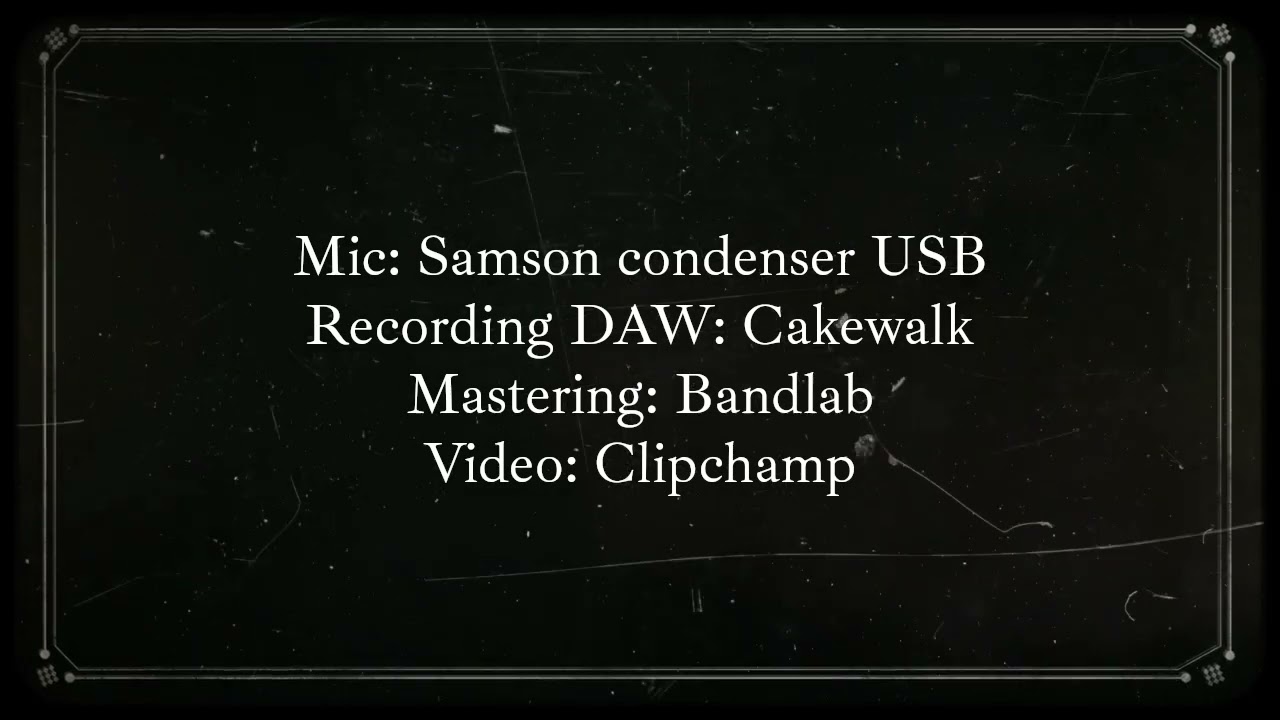
If you’re wondering what studio I use to record my songs, here it is.
The honest answer? A 15-year-old USB mic and some software on my computer. That’s it. In the video description I called it what it is: a cheap recording system.
Here’s my recording of “The Music of the Night” from The Phantom of the Opera, made exactly that way.
My whole setup, in four lines
This is the full list, the same one that shows up on screen in the video:
- Mic: a Samson USB condenser microphone. Mine is 15 years old.
- Recording (DAW): Cakewalk, on Windows.
- Mastering: Bandlab.
- Video: Clipchamp.
No mixing desk. No vocal booth. No expensive engineer. I titled the video “Free studio” for a reason.
Why an old mic is fine
That Samson has been with me for 15 years. It still works, so I still use it.
A USB condenser plugs straight into the computer. No extra box in between. For a singer who wants to practise, record and publish, that is the simplest path there is.
Will a professional studio sound better? Of course. But a professional studio is not where you learn. You learn by recording yourself again and again, hearing what you really sound like, and fixing it.
When I listed my own steps for a singing career years ago, one of them was simple: record yourself and post it. I admitted I had done it “somewhat” and could do a lot more. This setup is how I finally do it a lot more. You can read that list here: Tips for a singing career.
The four steps, in plain words
1. Record in Cakewalk. Cakewalk is my DAW, short for digital audio workstation. It’s where my voice gets recorded, take after take.
2. Master in Bandlab. Mastering is the final polish that makes a song sound finished and balanced. I let Bandlab handle that part.
3. Make the video in Clipchamp. For “The Music of the Night” I kept it very simple: an old-film style black card with the song title, my name and the gear list. The song is the star.
4. Upload and share. Then it goes to YouTube, and to my Music page here on the site.
That’s the whole system. Nothing secret.
Simple visuals are a choice
Some people think every song needs a big music video. I don’t think so.
With “The Music of the Night,” I wanted you to just listen. The Phantom’s song is about letting the music take over in the darkness. A dark, quiet screen fits that.
Other times I play more. For “Everything’s Coming Up Roses” from Gypsy, I made a full AI video in CapCut, using Seedance 1.0, because the higher models were too expensive. I needed a video to go with a recording I made on a new computer with new software from Bandlab. Not everything came out how I planned, and I posted it anyway, as part of learning and creating with AI.
That’s the point. Practice makes progress.
Why I love “The Music of the Night”
I’ve shared The Phantom of the Opera here before, including a rare version with five Christines and one Phantom: 5 Christines and 1 Phantom of the Opera.
“The Music of the Night” is a gift for a singer. It’s soft, then powerful, then soft again. It asks for control more than volume. Recording it at home is a good test, because the mic hears everything. Every breath, every wobble.
Breathing is the big one. If you want help there, start with Ways to Sing Better and Discover Your True Voice, especially the part about breathing from the belly instead of the chest.
Why a home setup matters
Stage work can keep me busy for weeks at a time. But a singer still needs to sing for himself, between shows and between projects.
A home setup like this means I can keep recording, keep learning and keep sharing, without waiting for studio time or a big budget. All you need is a mic, a laptop and the will to press record.
If you want to start
My advice is simple:
- Use what you have. An old mic that works is better than a new mic you’re still saving for.
- Record often. You get better by listening back, not by buying gear.
- Keep the video simple. A clean card and a good song are enough.
- Post it. Done and shared beats perfect and hidden.
When you post, give it a good title with words people actually search for, and edit out the fluff. I shared more of what worked for my channel in How to make your first 1000 subscribers in YouTube.
Listen to the video above and tell me what you think. And if you record at home too, tell me your setup in the comments. I’d love to hear it.
Want more like this? Get my new posts, behind-the-scenes stories and project news by email. No spam, unsubscribe anytime. Join my newsletter.